Protecting Vulnerable People
I grew up in the army. My dad grew up speaking German in a small central Texas community and probably because he was fluent in the language, we spent a chunk of my childhood stationed in Germany. I have vivid memories of visiting the death camps as a child, standing in the stark cinderblock shower rooms that had sometimes rained water and sometimes deadly gas on people stripped of all of their clothes, and a towering pile of shoes taken from those who died. All German children visited the death camps to assure that they remembered what had happened and to protect against repeating the same. I did not give much thought then to the fact that as I lived there in the 1960s, many of the people of Germany had been alive 25-30 years prior when fellow citizens were being targeted as having less value and ultimately loaded into trains headed for death camps. Most ordinary German citizens were never malevolent sociopaths. I knew them to be kind and generous. I imagine during Hitler’s reign many were afraid to stand up to the phobic rhetoric and frankly afraid that they would end up among the ostracized which in turn would make them vulnerable. Others may have just not felt comfortable looking too close.
Today all of us are watching in horror as armed masked men have been sent into blue cities to aggressively wield retribution against noncitizens and citizens alike. What about the children who are on the front lines watching peers, neighbors, and families being attacked and taken away? What are the consequences for the children who are themselves pulled away from their homes and communities and put into detention centers?
An effective strategy to protect victims of bullying is to lean into supporting people being targeted. For example if you see a person yelling at someone on a train, it is much more effective to start up a conversation with the victim than it is to confront the offender. I am heartened by the reports of communities coming together to protect people who are vulnerable in their communities. They have provided groceries, rent support, and shepherded children to and from school in Minneapolis.
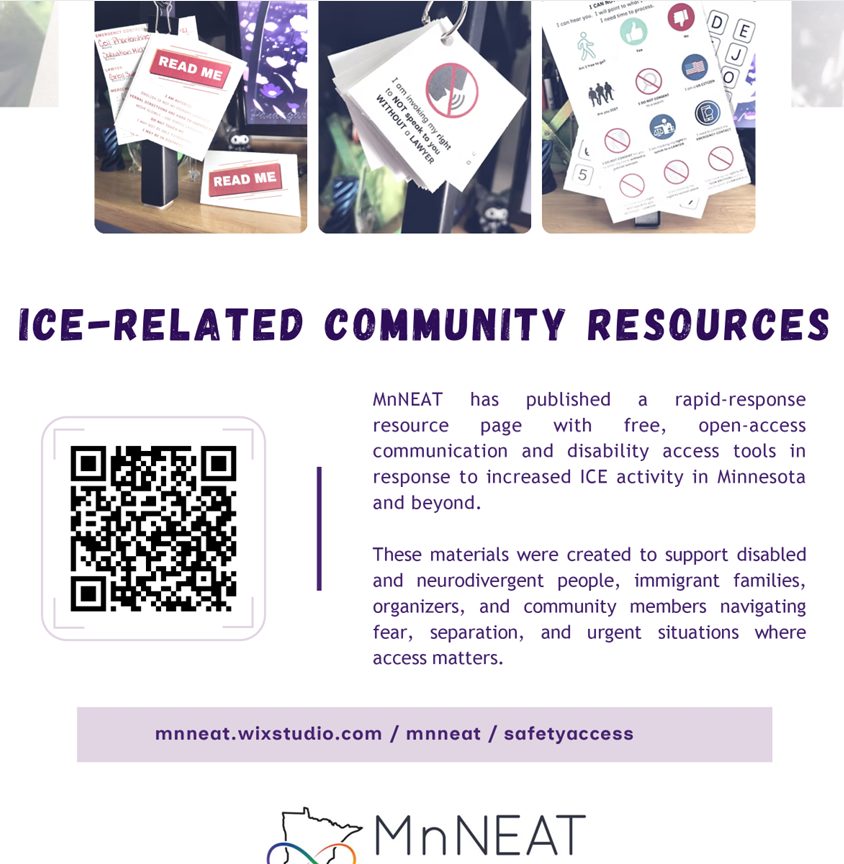
MnNEAT RAPID ICE-RELATED COMMUNITY RESOURCES:
Minnesota Neurodivergent Education and Advocacy Therapy Services has created free resources to help keep people with disabilities safer.